


Table Of Contents

Searqle Review: Identity Lookup, Face Recognition, and What It Can’t Do
Searqle is a people search platform that lets you look up someone’s identity using their phone number, email address, or — unusually — a photo of their face. If you’ve come across it while trying to identify an unknown caller, verify someone you met online, or find a lost contact, this review covers exactly what the platform does and where its limits are.
Searqle provides three core tools: reverse phone lookup, reverse email lookup, and face/image recognition search. This article covers how each feature works, what the subscription costs, what the platform no longer offers (full background reports have been replaced by lightweight identity data), and a direct comparison with Scannero for readers whose primary need is real-time location rather than identity verification.
What Is Searqle?
Searqle is a worldwide identity lookup and contact verification platform launched in 2023. It aggregates publicly available information — from public records, social profiles, business registrations, court filings, and online databases — into a single searchable interface. The platform is designed for fast identity discovery using minimal input: a phone number, an email address, or a face photo.
Searqle operates globally, covering individuals across multiple countries — not just the United States. The platform is SSL-secured, processes publicly available data only, and the person being searched is not notified that a search was run.
One important update: full standalone background check reports are no longer available on the platform. Background check functionality now exists in a lightweight form, accessible through the phone lookup tool, rather than as a comprehensive standalone report. For users who specifically need full criminal history or court record access, a dedicated background check service is better suited.
Searqle’s Three Core Features
Reverse Phone Lookup

Searqle’s phone lookup takes a phone number and returns the identity information associated with it: the person’s name, basic contact details, possible social profiles linked to that number, and limited background context. It’s most useful for identifying who is behind an unknown call, verifying that a contact’s stated phone number is genuine, or checking whether a number has been associated with reported spam or fraud.
The background data returned through phone lookup is lightweight — it confirms identity and basic contact context rather than providing a comprehensive criminal or court records report.
Reverse Email Lookup

The email lookup tool works from an email address rather than a phone number. It surfaces associated profiles, linked accounts, and publicly available identity information connected to that address — including possible social media profiles, online forum accounts, or other digital presences tied to the email. This is particularly useful for verifying whether an email address from an online contact, dating app match, or marketplace seller connects to a real, consistent identity.
Face Recognition

This is Searqle’s most distinctive feature and the one that sets it apart from most reverse lookup services. Users can upload a face photo or image, and Searqle searches publicly available online sources for matching profiles, associated images, and related online accounts.
The practical use cases are substantial: verifying whether someone’s profile photo is genuine or borrowed from another person online, identifying a face from a photo without a name, checking whether someone met on a dating or social platform is who they claim to be, or finding other online accounts connected to the same person. Face recognition search is increasingly relevant as catfishing and online identity fraud have become widespread, and very few people search tools include it as a standard feature.
How Searqle Works: Step by Step
The search process adapts to whichever input type you use:
- Visit searqle.io and select your search type: phone number, email address, or image upload
- Enter the phone number or email — or upload the face photo for image search
- Click “Search” to initiate the scan
- Searqle scans public records, social media profiles, business databases, and online directories for matches
- Results are compiled into a report showing the associated identity, contact information, and linked profiles
The person being searched is not notified. All data returned comes from publicly available sources — Searqle aggregates and presents it rather than accessing private accounts or communications. The platform works from any browser with no software installation required.
Searqle Pricing
Searqle offers a low-cost trial and two ongoing subscription options.
| Plan | Price | Duration | Notes |
|---|---|---|---|
| Trial | $1.00 | 7 days | Full feature access; auto-converts if not cancelled |
| Weekly Subscription | $14.90 | Per week | Ongoing, cancel any time |
| Monthly Subscription | $39.90 | Per month | Best value for regular use (~$1.33/day) |
The $1 seven-day trial provides access to all three search features — phone lookup, email lookup, and image search. At $39.90 per month, the monthly plan is competitive for an all-in-one identity lookup platform that includes face recognition search, which most comparable tools charge a premium for or don’t offer at all.
The weekly plan at $14.90 is best suited for short-term or one-time use; for regular users, the monthly plan represents meaningfully better value at roughly one-third the per-week cost.
Searqle Pros and Cons
| Pros | Cons |
|---|---|
| Face recognition / reverse image search — rare in this category | Background check is lightweight only — no standalone full criminal records reports |
| Global coverage — not limited to US users or subjects | Relatively new platform (2023) — database less established than Spokeo or BeenVerified |
| Three search types in one subscription | Weekly plan ($14.90/week) is expensive for occasional use |
| Legal, public-data platform — target is not notified | Results depend on how much public data the person has online |
| 500M+ name records, 157M+ phone records | No real-time location tracking — shows identity data, not where someone is now |
| No app install required — works in browser | |
| SSL-secured, established since 2023 |
Is Searqle Legit? What Users Report
Searqle is a legitimate platform. It has a valid SSL certificate, processes public records within legal boundaries, and operates as a genuine identity lookup service. As a platform launched in 2023, it’s relatively new compared to established alternatives — its database of 500M+ name records and 157M+ phone records is functional, but not as deep as services like Spokeo (which has been operating for nearly two decades) or BeenVerified.
User feedback across review platforms follows a consistent pattern: positive comments emphasize how easy the interface is to use, with clear step-by-step search guidance and quick results for numbers and emails that have significant online footprints. Critical feedback typically centers on searches that return only basic details for individuals with limited public data presence — which is a database maturity issue rather than a platform failure.
The face recognition feature receives specific positive attention from users who used it to verify online contacts. For a platform launched two years ago, the breadth of features it now offers is notable — particularly the inclusion of image-based identity search at no additional cost.
Who Is Searqle For — and Where It Doesn’t Help
Searqle is well-suited for anyone who needs to verify someone’s identity before engaging with them further: identifying an unknown caller, checking whether an email address is genuine, running a reverse image search on a photo from someone met online, or confirming that a person is who they claim to be before a transaction or meeting.
It is not the right tool for real-time location tracking. Searqle answers the question “who is this person?” using historical public data. It cannot tell you where someone is right now, and it has no mechanism for live GPS tracking. For users whose concern is current location — checking that someone arrived safely, confirming where a family member is, or tracking a device — a different tool is needed.
Searqle vs. Scannero: A Direct Comparison
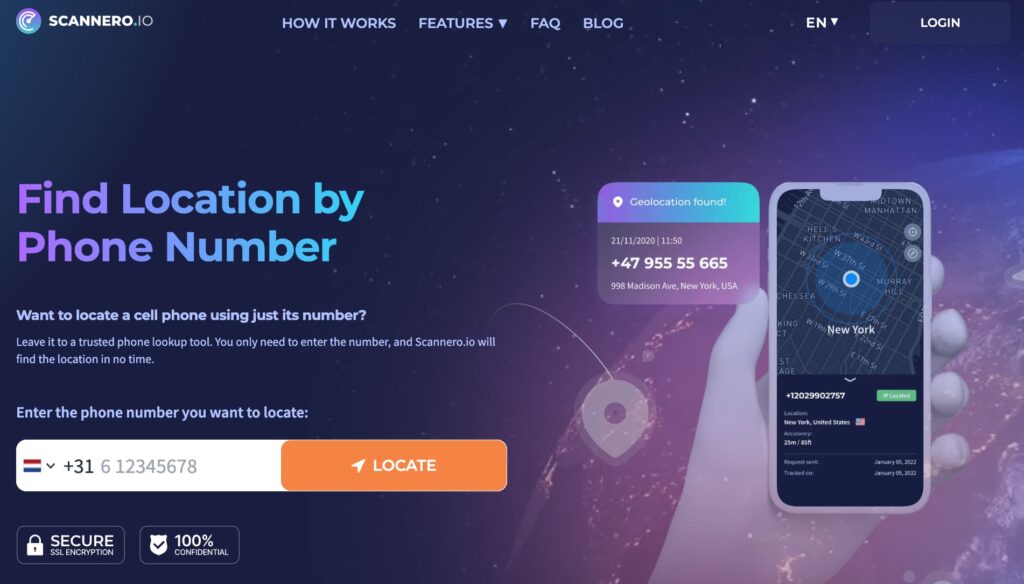
The key difference between Searqle and Scannero is what kind of question each tool answers. Searqle answers: who is this person, based on what’s publicly known about them? Scannero answers: where is this person right now?
These aren’t competing approaches to the same problem — they solve different problems. A reader who needs to verify the identity behind an unknown email, or check a face photo from a dating app, should use Searqle. A reader who needs a live GPS location from a phone number should use Scannero.
| Feature / Criteria | Scannero | Searqle |
|---|---|---|
| Primary function | Real-time GPS location by phone number | Identity lookup from phone, email, or photo |
| Data type | Live GPS coordinates | Historical public records |
| Face / image recognition | No | Yes — core feature |
| Reverse phone lookup | Yes — returns location | Yes — returns identity data |
| Reverse email lookup | No | Yes |
| Worldwide coverage | Yes | Yes |
| No install required | Yes | Yes |
| Target notified | No | No |
| Real-time tracking | Yes | No |
| Monthly price | $49.80 | $39.90 |
Key Differences
Scannero’s link-based tracking returns a live GPS coordinate — where the person’s phone is at this moment. Searqle’s phone lookup returns identity data based on public records — who the number belongs to, what profiles it’s connected to, what basic background context is available. The two tools complement rather than substitute for each other.
For users who need to locate someone who isn’t responding — a parent checking on a teenager, someone confirming a family member’s safety — Scannero’s live tracking link is the appropriate tool. For users who need to identify someone before or after contact — verifying a caller’s identity, checking a photo for catfishing, looking up an email — Searqle is better suited.
Frequently Asked Questions
Is Searqle legit?
Yes. Searqle is a legitimate identity lookup platform with valid SSL certification, launched in 2023. It processes publicly available information from public records, social profiles, and online databases. It is not a scam. As a relatively new platform, its database continues to mature — searches for individuals with limited online footprints may return only basic details.
Is Searqle free?
There is no fully free version. Searqle offers a $1 seven-day trial that provides full access to all three search features — phone lookup, email lookup, and image/face recognition search — with no restrictions. After the trial, the platform rolls into a weekly ($14.90) or monthly ($39.90) subscription.
Does Searqle work outside the United States?
Yes. Searqle now operates globally and is not limited to US users or US-based subjects. The platform covers individuals internationally, making it suitable for searches involving phone numbers, email addresses, or face photos from any country.
Verdict: Is Searqle Worth It?
Searqle is a well-positioned identity lookup tool with a feature set that most comparable platforms don’t match — particularly the inclusion of face recognition search at no extra cost. For users who need to verify identities, identify unknown contacts, or run reverse lookups across phone numbers, emails, and photos, the $39.90 monthly plan offers solid value.
The main caveats are database maturity and scope. As a 2023 platform, search depth varies depending on how much public data a person has online. And the platform’s scope is intentionally focused on identity verification — it was never designed for real-time tracking.
For readers who need current location rather than historical identity data, Scannero handles that use case: it tracks a phone’s real-time GPS position via a link sent to the number, returning live coordinates rather than a records-based profile. The two tools address fundamentally different questions, and the choice between them comes down to which question you actually need answered.

Related posts
 May 25, 2026
 May 25, 2026
 May 25, 2026





